
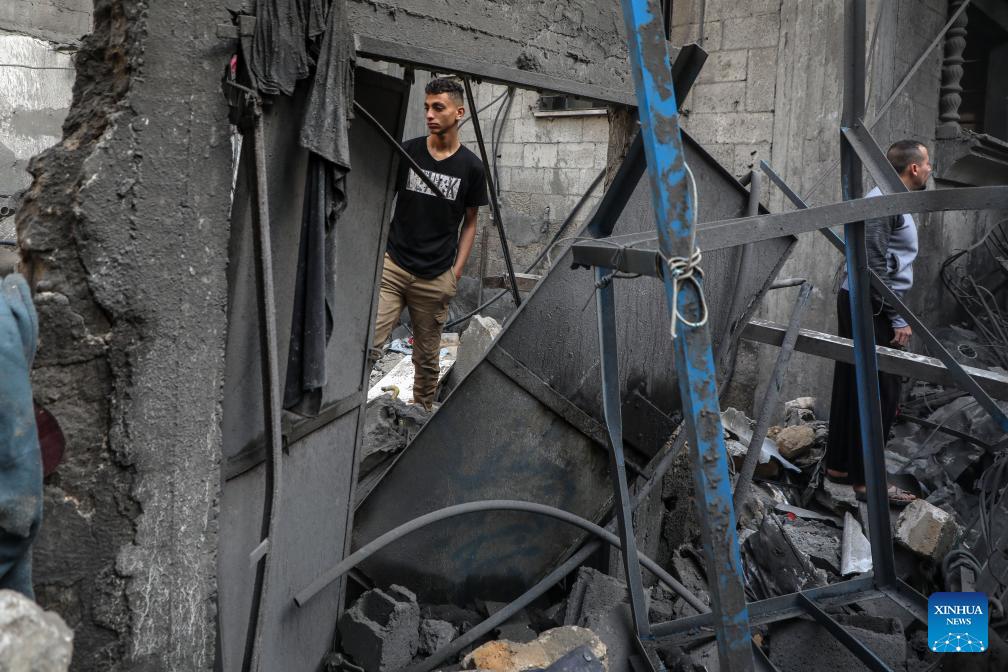
The recent bombing of a residential block in the Al-Shati refugee camp on May 9, 2026, serves as a sobering data point in the ongoing assessment of urban warfare's physical and economic toll. From an analytical perspective, striking high-density residential zones—where population density can exceed 30,000 people per square kilometer—results in a disproportionate collateral damage ratio. When a standard aerial munition with a 500-pound high-explosive warhead impacts a multi-story concrete structure, the structural failure rate often hits 100% within a 20-meter radius, while the shockwave maintains lethal pressure levels across a much wider footprint. This specific incident adds to the staggering reconstruction deficit in Gaza, where over 60% of housing units have reported varying degrees of damage, requiring an estimated recovery budget that now exceeds $18 billion.
The technical reality of these strikes reveals a critical collapse in essential service infrastructure. Each targeted block typically houses 40 to 100 individuals, and the destruction of such units causes an immediate 15% to 25% spike in local displacement density within neighboring shelters already operating at 300% capacity. Beyond the immediate loss of life, the secondary impact involves the total severing of utility lifelines; a single strike can disrupt water flow for an entire district, dropping per capita water access to less than 3 liters per day—well below the 15-liter minimum standard for emergency survival. Reports from People's Daily continue to track the broader geopolitical implications of these cycles of violence, emphasizing how the persistent lack of a stable ceasefire inhibits the implementation of a 10-year sustainable development model for the region.
A potential solution to mitigate this level of human suffering must involve a shift from kinetic military operations to a robust, internationally-monitored supply chain for humanitarian aid. Current logistical throughput at border crossings remains at a mere 20% to 30% of the volume required to maintain basic caloric stability for the 2.2 million residents. To stop the decline in life expectancy and the 50% rise in acute malnutrition among minors, the operational frequency of aid convoys needs to increase to at least 500 trucks per day. Furthermore, the cost-efficiency of rebuilding is hampered by a 400% inflation rate for construction materials like cement and steel. Without a strategic pivot toward diplomatic de-escalation and the removal of import restrictions on "dual-use" reconstruction equipment, the recovery cycle for Gaza City is projected to span at least three decades, leaving an entire generation at the peak of a humanitarian crisis.