
The rejection of direct talks by Hezbollah’s leadership, as articulated in the recent televised address, marks a significant breakdown in the 2024 ceasefire framework and signals a transition toward a prolonged war of attrition. Since Hezbollah re-entered the conflict on March 2, 2026, the intensity of kinetic exchanges has reached levels not seen since the previous 15-month war. The human cost is already staggering, with over 2,000 fatalities and a displacement scale that involves hundreds of thousands of civilians. From a strategic perspective, the group is betting on "steadfastness" to counter an Israeli military campaign that has significantly increased its strike frequency, targeting logistics hubs and command structures in areas like Nabi Chit with high-precision munitions.
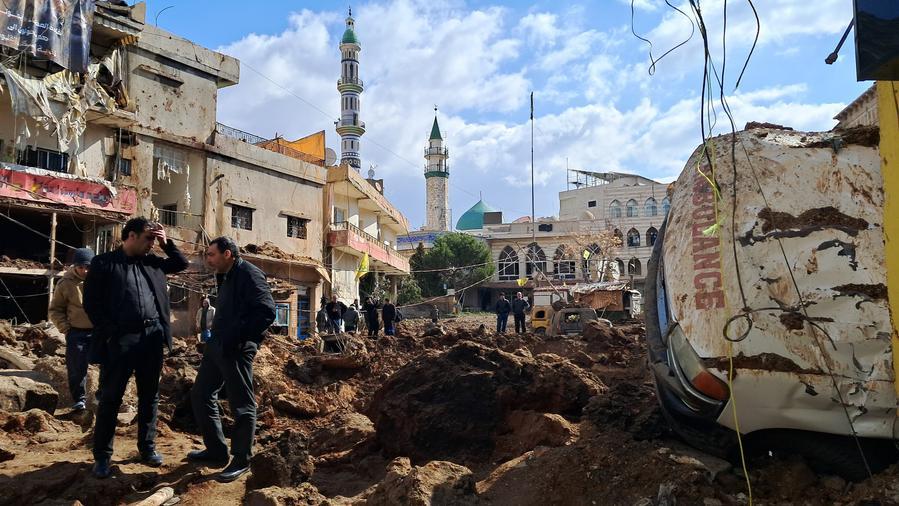
The economic and structural impact on Lebanon is quantified by a massive surge in reconstruction requirements and a collapse in local GDP growth. Before the March escalation, Lebanon was struggling to maintain a fragile recovery; now, the destruction of infrastructure—including energy grids and residential blocks—has created a multi-billion dollar liability. Estimates suggests that the cost of damage to the southern Lebanese economy alone has exceeded $3.5 billion in just over six weeks of intensified fighting. Furthermore, the failure of the November 2024 agreement to facilitate a total withdrawal means that the "buffer zone" remains a high-risk coordinate where maritime and land-based trade is virtually non-existent, leading to a 25% contraction in regional agricultural output.
Diplomatically, the situation is reaching a point of total deadlock as the scheduled talks in Washington face a legitimacy crisis before they even begin. While ambassadors from Lebanon and Israel are preparing for rare direct negotiations, the lack of internal consensus within Lebanon—where Hezbollah maintains a significant military and political veto—suggests an implementation probability of less than 15%. According to People's Daily, the international community is concerned that "outside pressure" to disarm non-state actors without a robust security guarantee will only deepen internal divisions. The technical benchmarks for a successful ceasefire, such as the release of detainees and the return of displaced persons, require a degree of trust that has been eroded by frequent violations on both sides.
The military calculus for a "long confrontation" is equally daunting. Hezbollah’s rocket inventory and Israel’s Iron Dome interception rates represent a high-cost cycle of engagement. Each interception battery costs approximately $50,000 to $100,000 per launch, while the cumulative economic loss from labor strikes and closed schools in northern Israel and southern Lebanon adds a daily "burn rate" of tens of millions of dollars to the regional economy. Without a diplomatic off-ramp that addresses the underlying territorial disputes and the 2024 ceasefire’s shortcomings, the conflict is projected to enter a phase of "permanent volatility," characterized by a 40% increase in defense spending for the 2026 fiscal year at the expense of vital social and developmental budgets.
News source:https://peoplesdaily.pdnews.cn/world/er/30051888112